
No products in the cart.
Shop Now!

2025
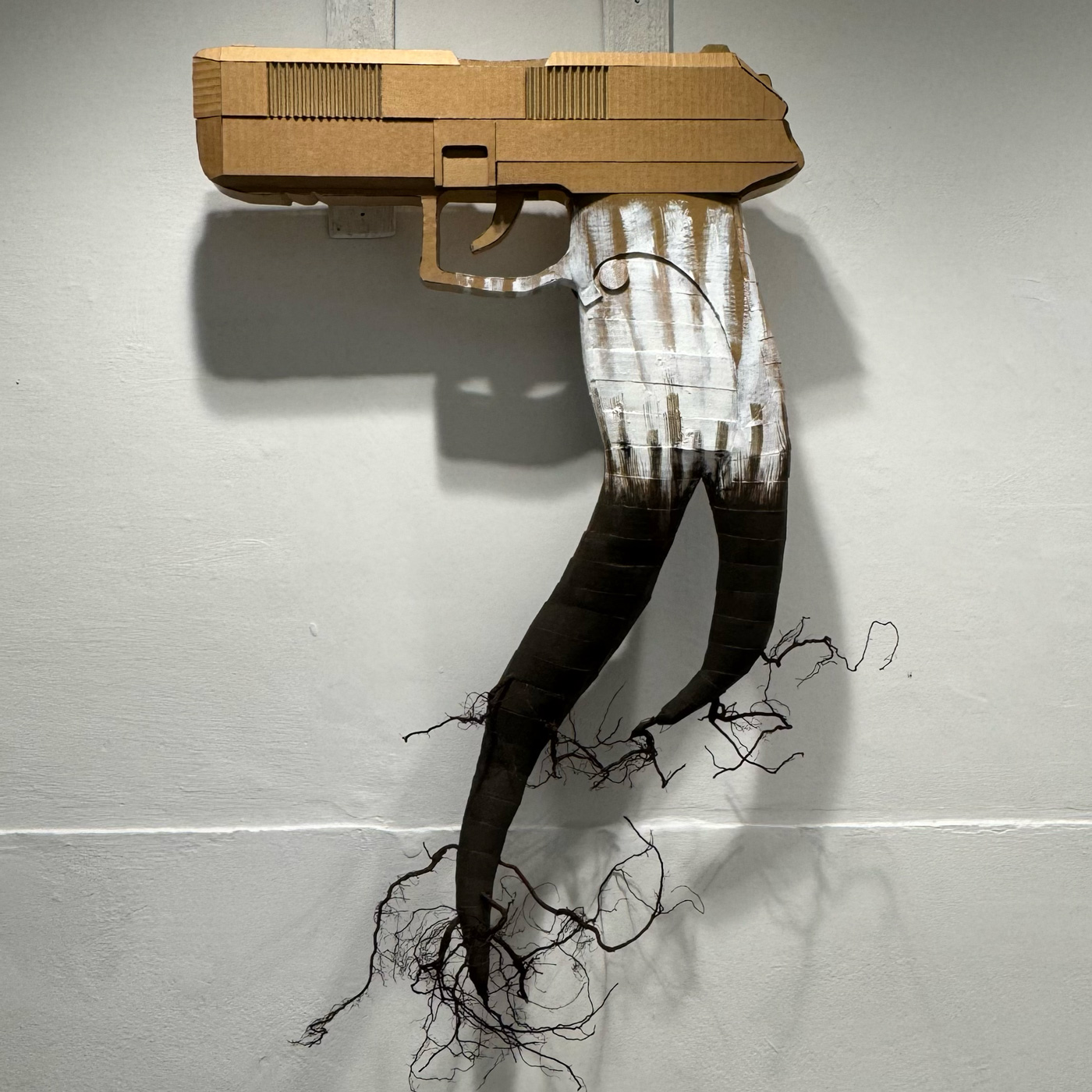
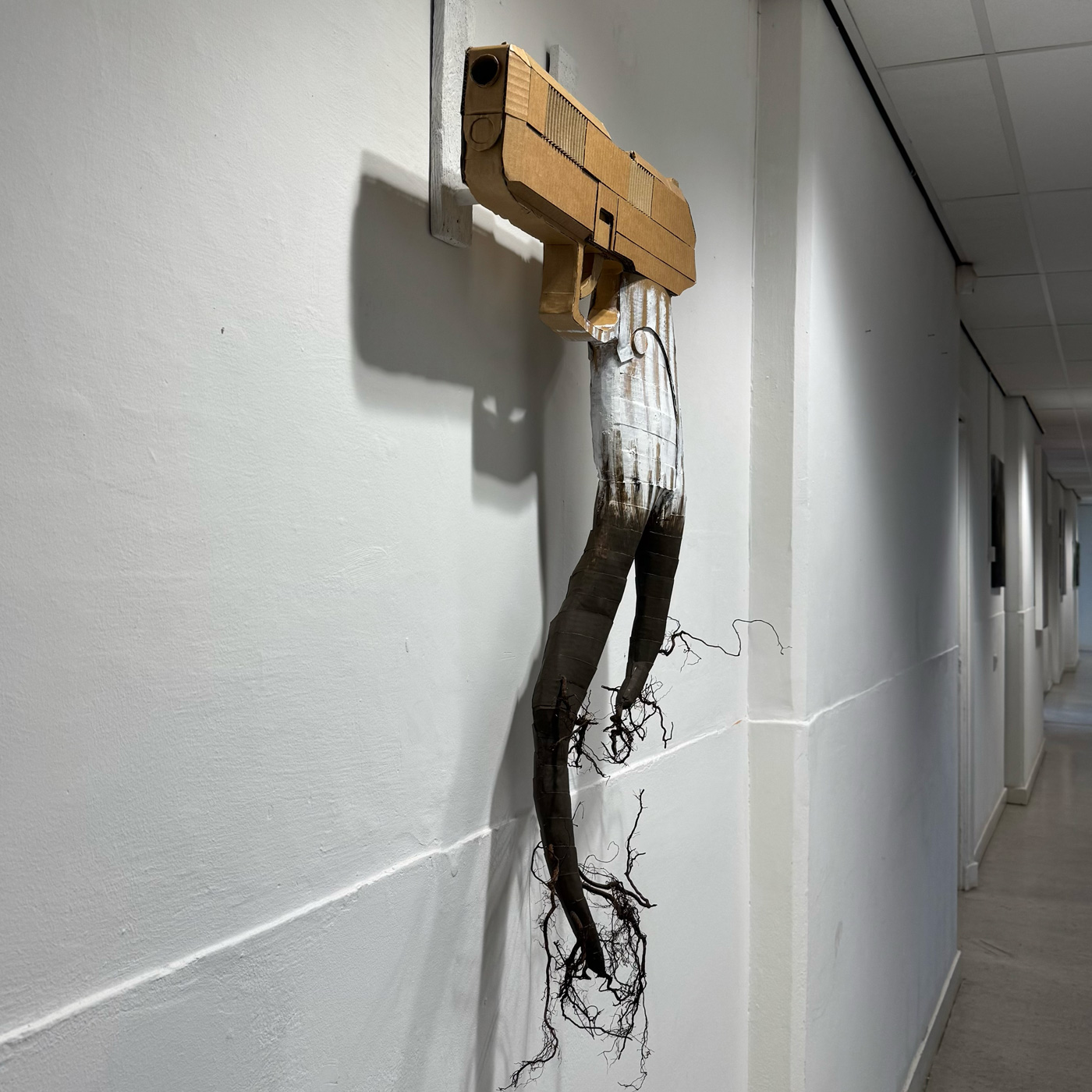
Kartonnen sculptuur met echte boomwortels uit een oorlogsgebied in Oekraïne
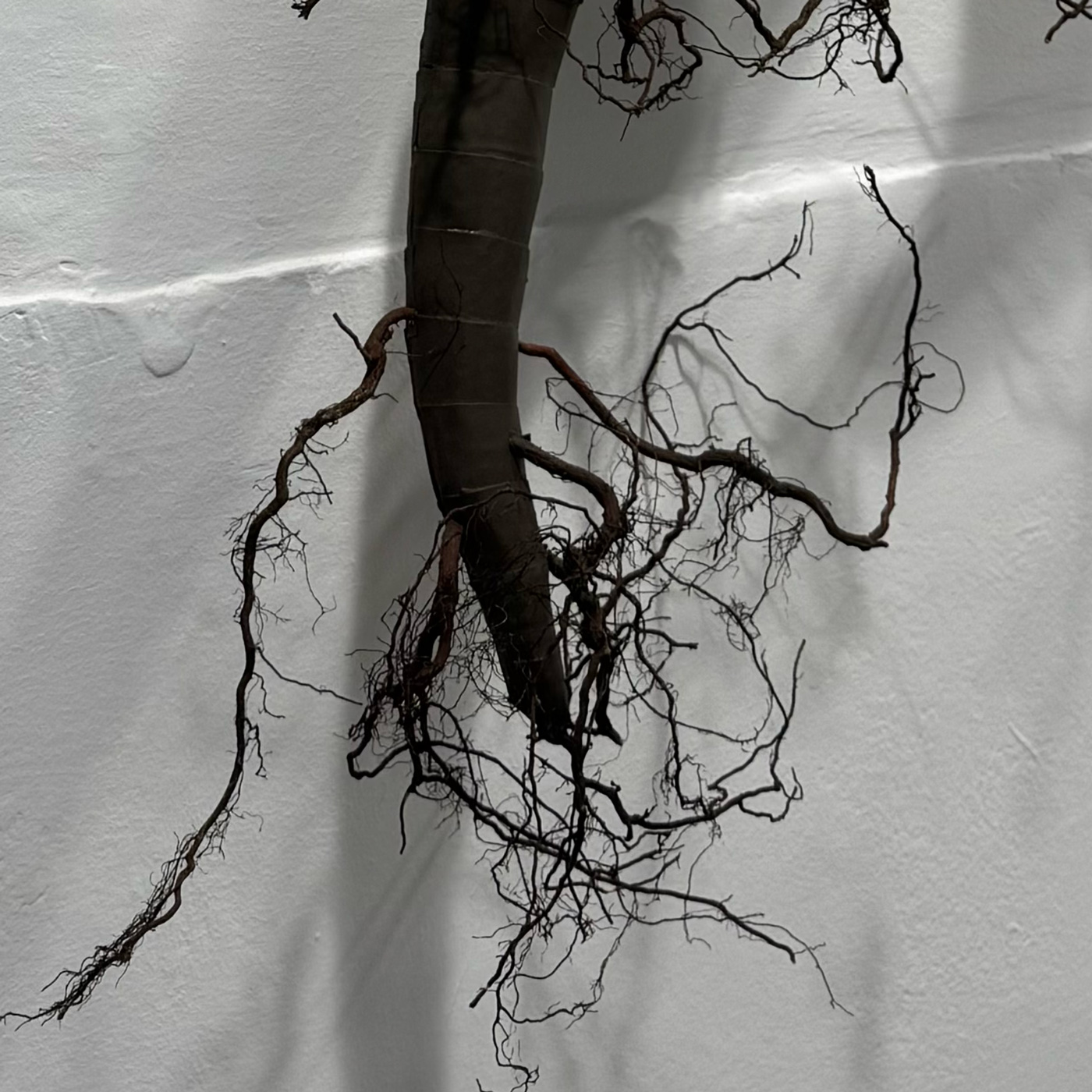
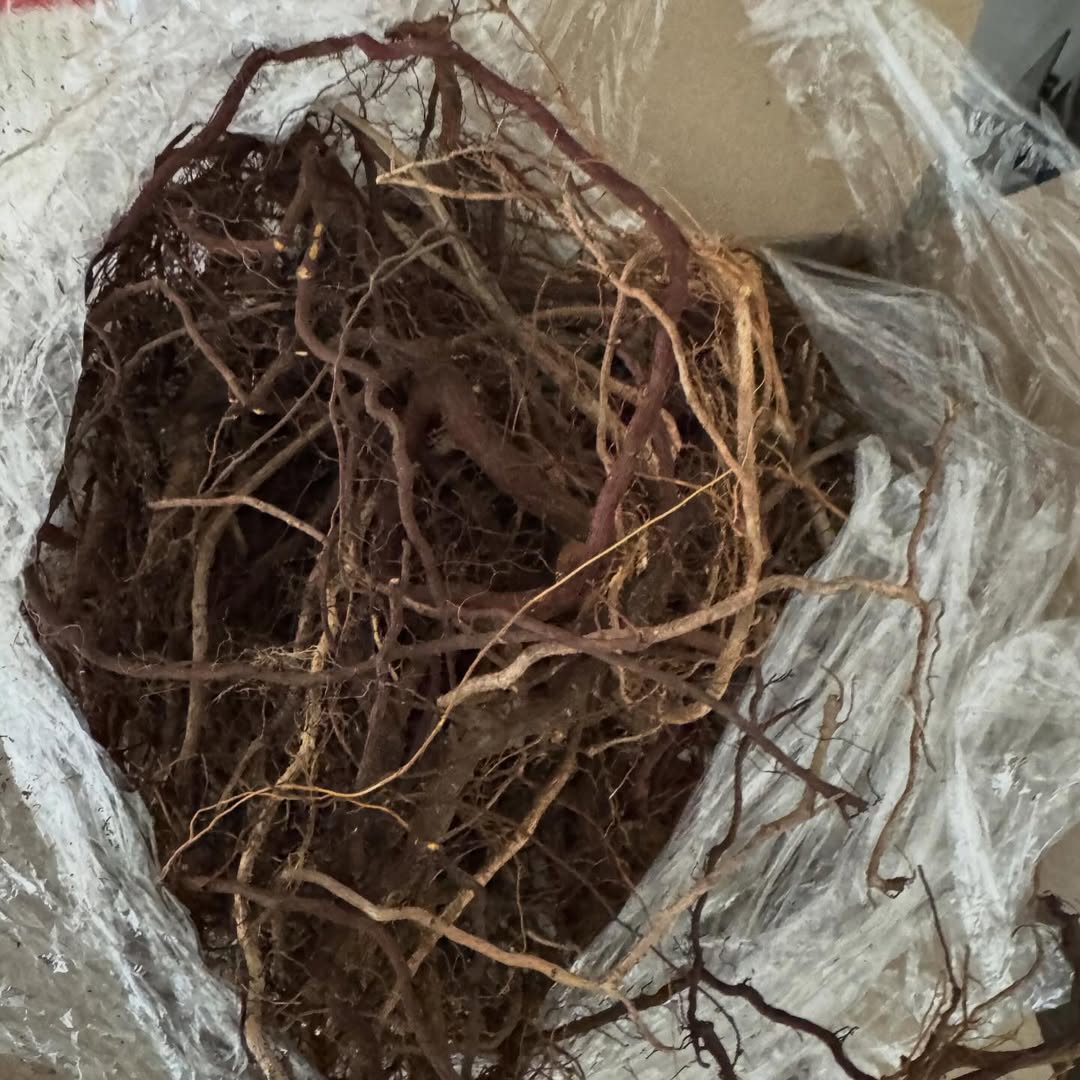
Materialen: Kartonnen doos, inkt, boomwortels
Afmetingen: 100 cm hoog / 60 cm breed / 15 cm diep
This is Not a Gun is een serie handgemaakte kartonnen wapens die bewust de grens vervaagt tussen fascinatie en ongemak. Geïnspireerd door La Trahison des Images confronteert het werk ons met een eenvoudige tegenstelling: we weten dat het niet echt is—en toch reageren we alsof het dat wel is.
De wapens zijn fragiel, hol en onmiskenbaar nep. Maar uit de onderkant dringen echte boomwortels—afkomstig uit een oorlogsgebied in Ukraine—het object binnen. Wat begint als beeld, wordt iets dat moeilijker te negeren is. Iets dat gewicht krijgt.
Opgegroeid met een constante stroom aan filmisch geweld, hebben we geleerd om vernietiging op veilige afstand te consumeren. Wapens werden esthetiek. Cool. Controleerbaar. Totdat dat niet meer zo was. Dit werk zoekt die spanning op en laat zien hoe makkelijk we spektakel loskoppelen van consequenties.
Want als dit “geen wapen” is—waarom voelt het dan toch als één? En belangrijker nog: waarom vinden we het mooi?